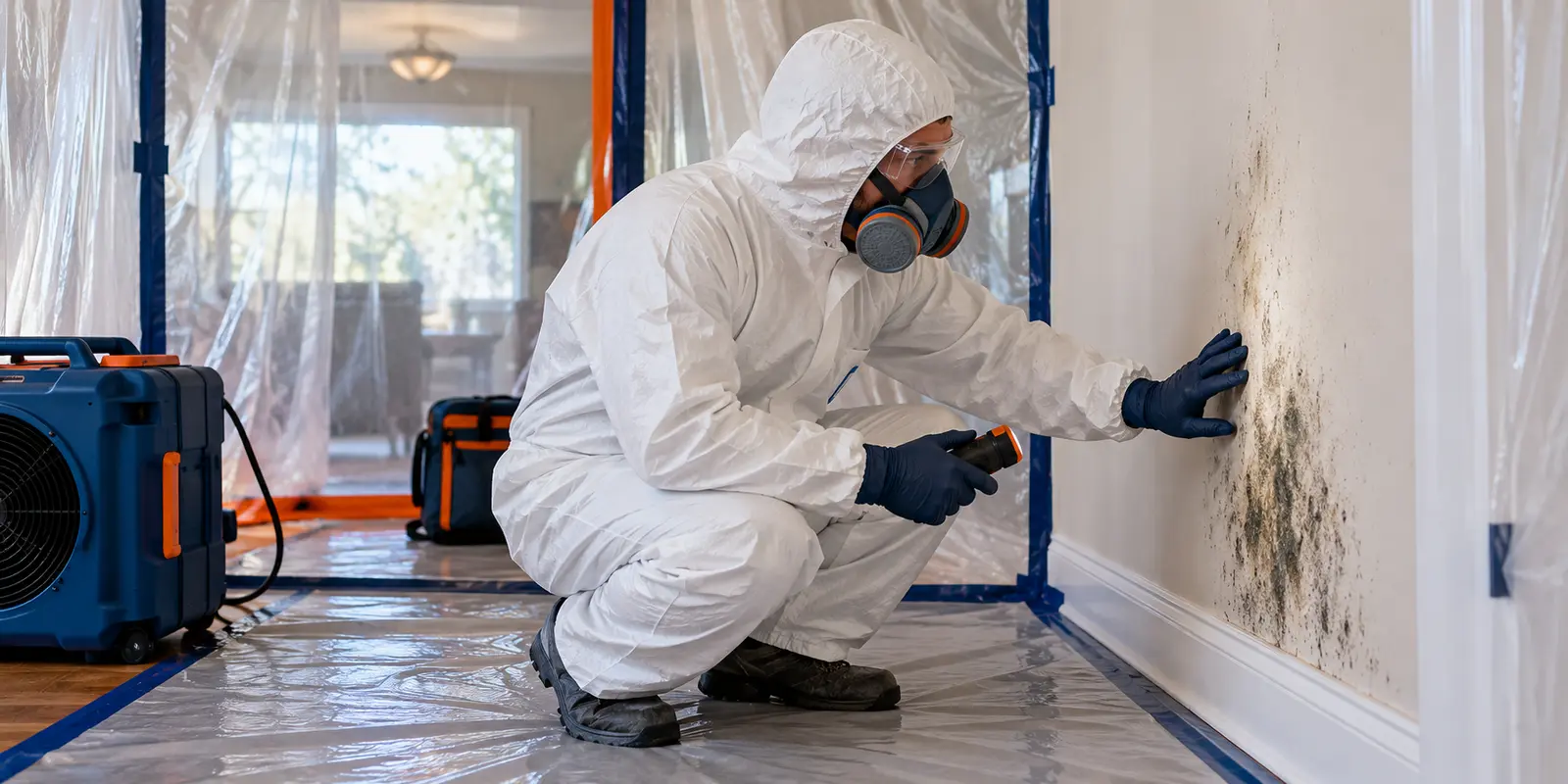
Mold deserves a careful, controlled response.
Suspected mold calls for more than a surface cleaning. Apex helps assess affected areas, plan controlled remediation and address the moisture conditions behind the problem.
A closer look at the work
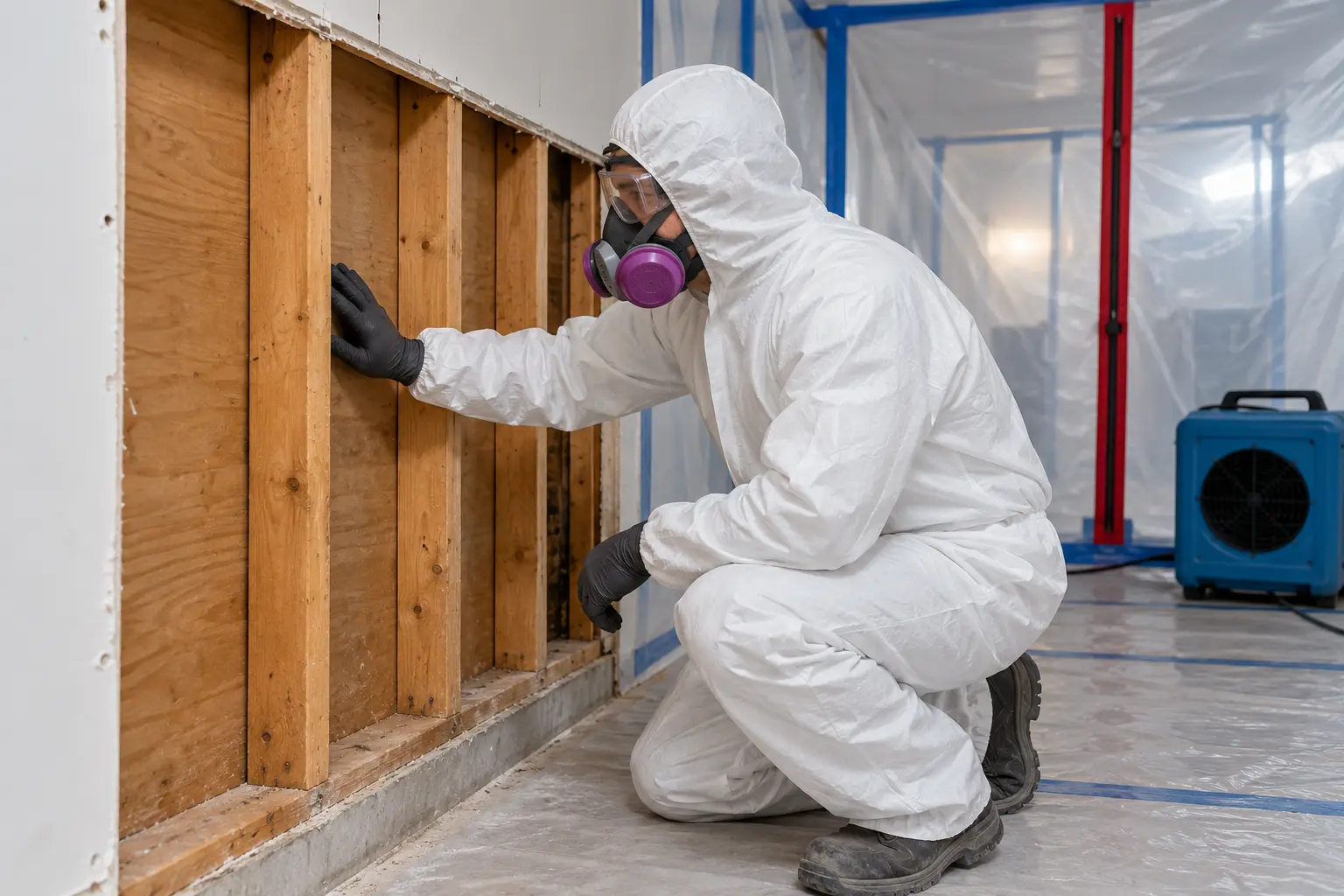
Take indoor growth seriously. Start with moisture.
Mold can damage building materials and affect people with allergies or asthma. If you have health concerns, consult a healthcare professional.
A leak, condensation or unresolved dampness can support growth. Cleaning without correcting the moisture problem can leave conditions for it to return.
Removal and remediation are different ideas.
Remediation addresses abnormal growth and its causes. It does not mean eliminating every naturally occurring mold spore or guaranteeing future conditions.
Read common questions →Suspect mold? Take these precautions.
Limit exposure and avoid spreading particles while the affected area is being assessed.
What to do
- Turn off air-moving equipment
Shut off your HVAC system, fans and other equipment that moves air through the home. Keep them off until the affected area has been assessed.
- Keep the area off limits
Keep children, pets and other occupants away. Close an existing door if you can do so without disturbing affected materials.
- Address active leaks safely
If you can safely stop the water source without entering a hazardous area or disturbing growth, do so. Otherwise, contact a qualified professional.
What to avoid
- Disturbing affected surfaces
Do not touch, scrape, sand or cut into suspected mold.
- Blowing air across growth
Do not aim fans or air movers at visible or suspected mold.
- Starting uncontrolled drying
Have suspected mold assessed before setting up drying equipment in the affected area.
- Relying on sprays
Do not treat bleach or disinfectant as a substitute for proper removal and moisture correction.
- Covering up growth
Do not paint or caulk over mold. The growth and moisture problem need to be addressed first.
A plan that accounts for the affected area.
The scope and controls depend on the conditions. Not every project requires the same equipment or removal work.
01 / Initial discussion
We ask about the location, visible conditions, water history and access so we can plan the assessment.
02 / Assessment and scope
Review affected materials and moisture conditions. Discuss any need for additional investigation or an independent environmental professional before work begins.
03 / Containment
Select controls to limit movement of debris and particles into other areas. Consider work boundaries, access and air movement before disturbing affected materials.
04 / Filtration and dust control
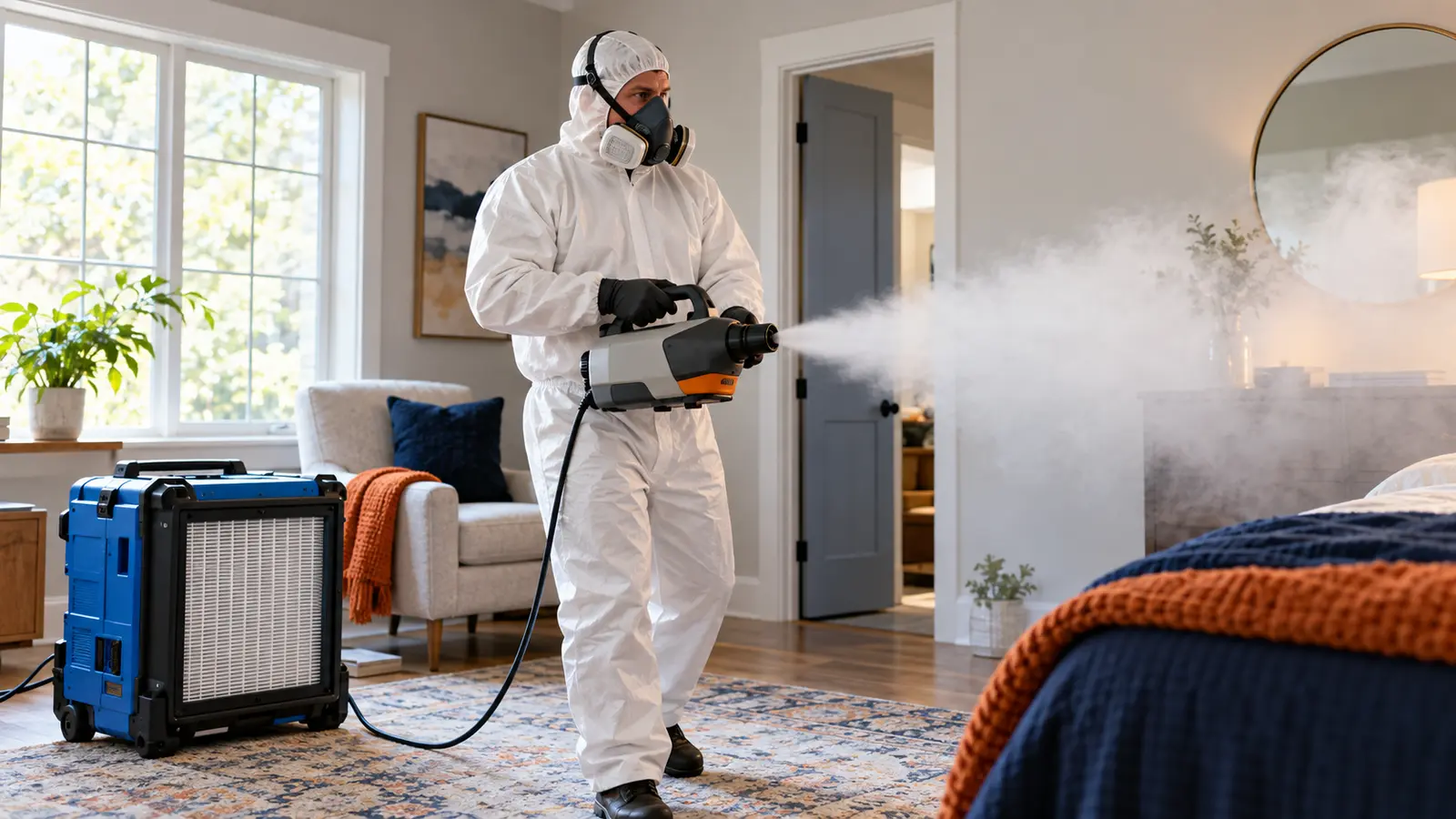
Where appropriate, incorporate HEPA-filtered equipment and controlled work practices into the remediation plan.
05 / Removal and cleaning
Remove materials that cannot be adequately cleaned, then clean remaining affected surfaces. Porous materials may require disposal. Treatment alone does not replace removal of growth.
06 / Moisture correction and drying
Discuss the underlying moisture issue and the work required to correct it. Evaluate drying needs before enclosing affected areas.
07 / Review and restoration
Review the work against the agreed scope, including any specified independent verification. Plan repairs after remediation and moisture concerns have been addressed.
Know what the assessment can establish.
Visible growth and moisture conditions guide the initial review. Testing is not automatically required for every project, and appearance alone does not identify mold species or determine health risk.
If sampling, a written protocol or independent post-remediation verification is appropriate, discuss who will perform it and how the results will be used. Do not assume these are included in a standard assessment.
Plan around the people using the property.
Discuss occupancy, sensitive occupants, access and business operations before work begins. Whether an area can remain occupied depends on the conditions, scope and controls.
Keep photos, findings and work records organized. Insurance coverage depends on the policy and cause of loss; the insurer makes that determination.
Make informed decisions about mold.
Does black-colored mold mean it is toxic?
Color does not establish species or health risk. Address indoor growth and moisture regardless of color.
Can I clean a small area myself?
EPA says many areas under roughly 10 square feet can be handled by occupants using its precautions. Extensive water damage, contaminated water, HVAC concerns or health concerns call for additional guidance. Size alone does not decide every case.
Can we remain in the property during remediation?
That requires a project-specific decision. Discuss the affected location, containment, access and occupant concerns before work begins. We do not promise that occupancy is appropriate in every case.
Will the mold come back?
Recurrence is possible if moisture persists or a new moisture problem develops. Remediation is not a guarantee against future growth.
Can you guarantee that the building is mold-free?
No. Naturally occurring spores cannot all be eliminated. The goal is to address abnormal growth, affected materials and moisture conditions.
Homeowner guidance: EPA mold cleanup guidance and EPA guide to mold and moisture.
Discuss your mold concerns with Apex.
Call Apex at (919) 807-1102 to discuss your property.